Back to home

IHHT. Oxygen training with personal guidance.

A supervised application while you sit or lie down. Through a mask, you alternate between breathing air with lower and higher oxygen concentrations. We discuss whether IHHT could have an appropriate place in your recovery plan and monitor your response, heart rate and oxygen saturation during the session.

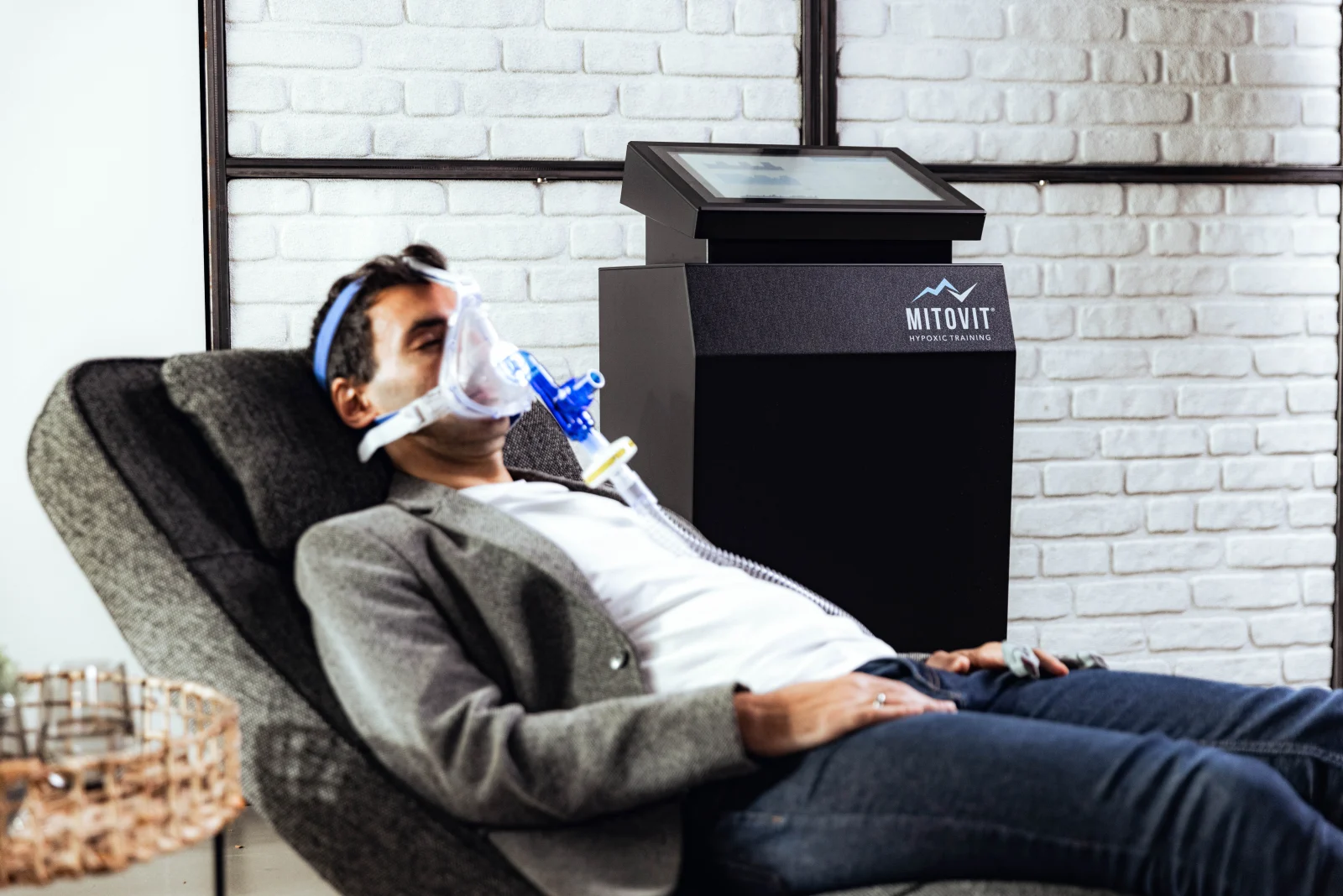
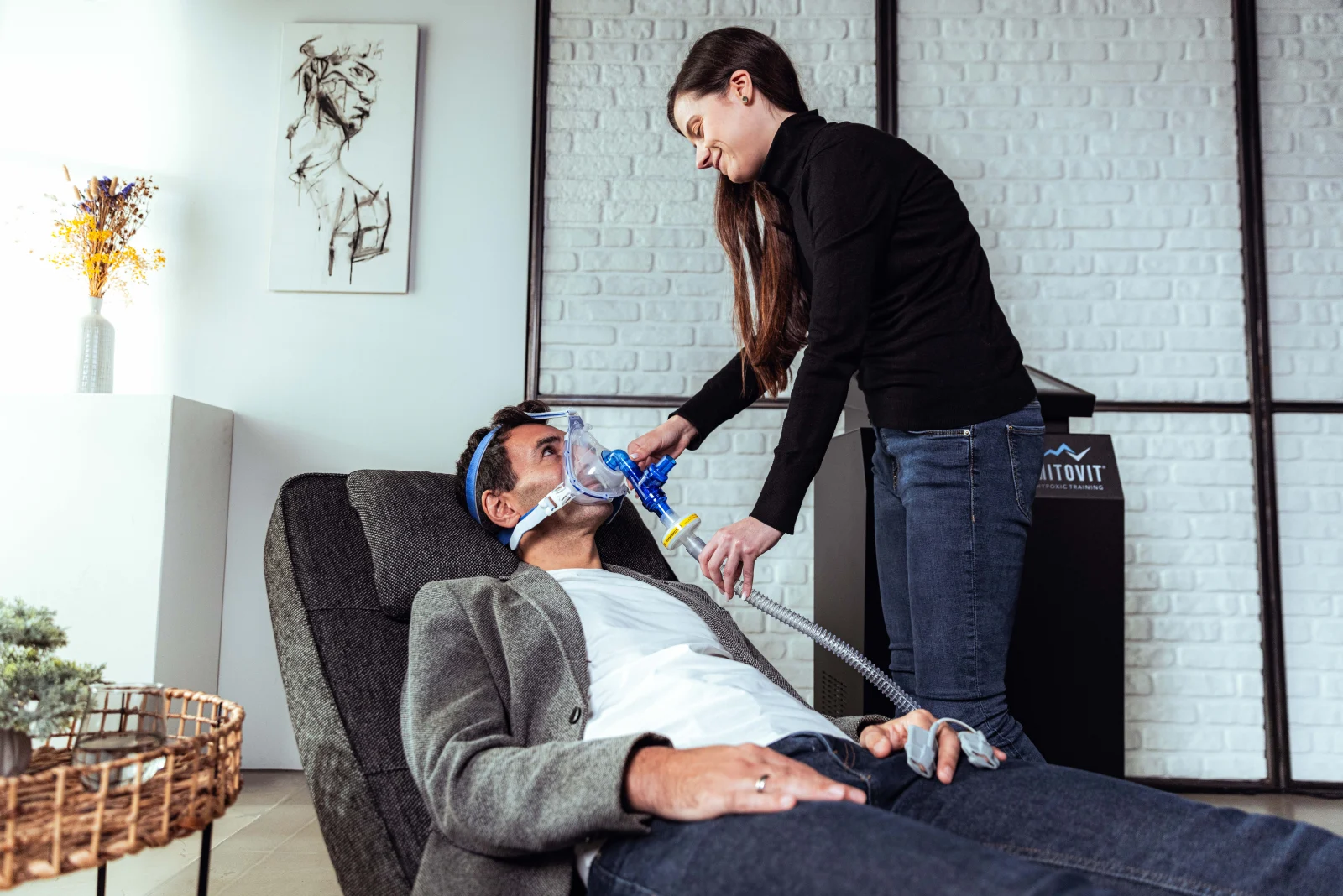
A person resting with a breathing mask next to the IHHT device
IHHT at rest
Application
Breathing through a mask
During the session
At rest, with guidance
Monitoring
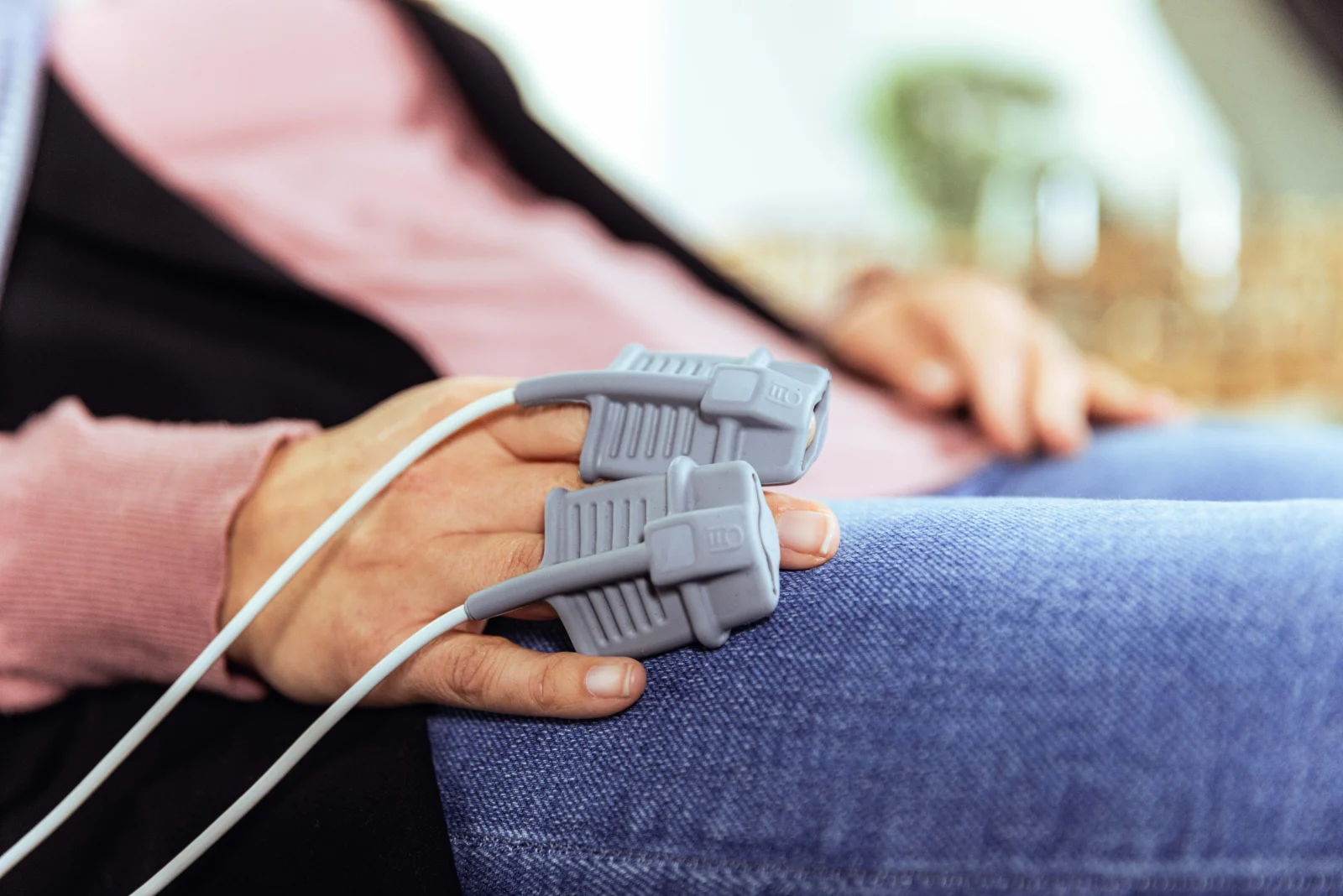
Heart rate and oxygen saturation
The treatment in pictures

The same mask.
A different air mixture.

You remain seated quietly. The device alternates the amount of oxygen in the air you breathe. The two phases follow each other several times during a session.

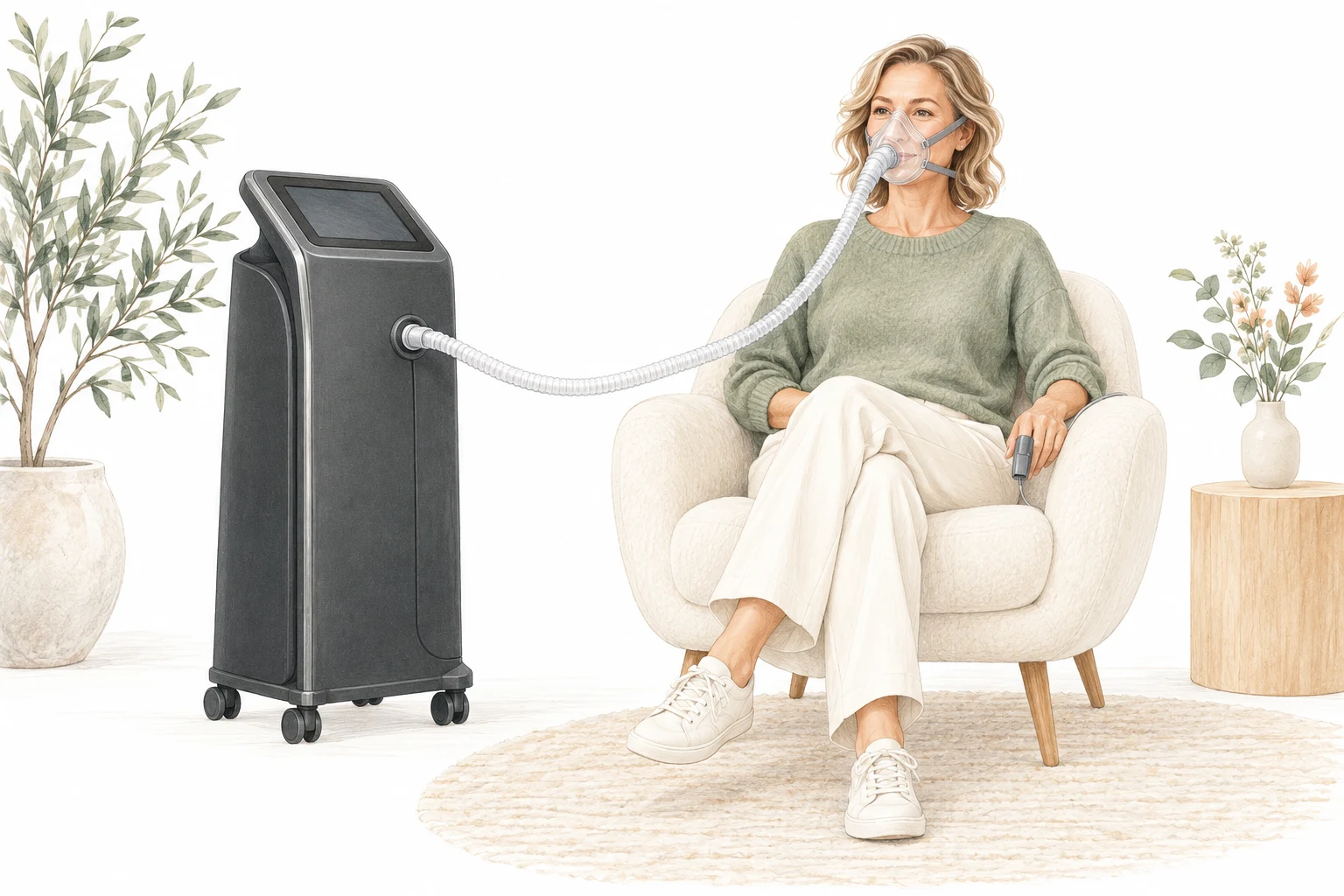
One device supplies air through one tube to the mask. The person remains seated calmly; a finger sensor monitors the response.
You remain seated quietly. The device changes the air mixture.

What comes out of the device?

● Oxygen · grey: other gases

First: less oxygen.

The device temporarily supplies air containing less oxygen than ordinary ambient air. You breathe through the mask; you do not need to hold your breath.

The same device then switches to oxygen-rich air.

The dots magnify the composition of the air. More orange pairs mean a greater proportion of oxygen in the same amount of air. These are illustrative proportions, not treatment settings. The animation is accelerated.

Beforehand

First, a careful assessment.

We discuss your health, medication and capacity for activity. We explain the mask and supervision.

During the session

Keep breathing calmly.

You remain seated while the air mixture changes. Your supervisor monitors your response, and you can always say how you feel.

Afterwards

Evaluate together.

We discuss your experience and follow your personal goals. This helps decide whether to continue, adjust or finish.

Tailored to you. Monitored during the session.

Your supervisor adjusts the application to your situation. A sensor monitors your oxygen saturation and heart rate. The oxygen concentration in the air you breathe is different from the oxygen saturation the sensor measures in your blood.

And what happens in your body?

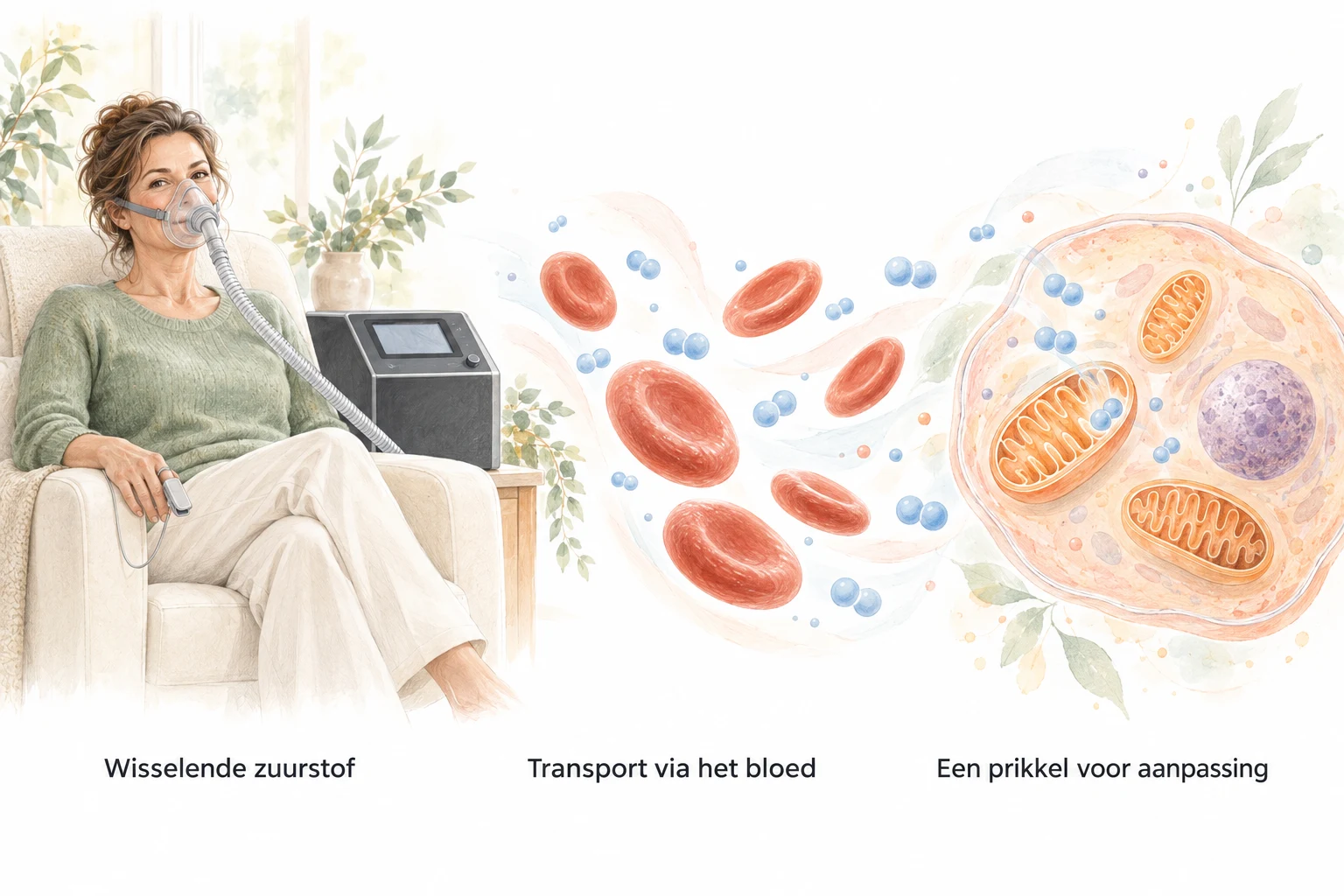
Oxygen passes through your lungs into your blood and is carried mainly bound to haemoglobin in red blood cells. Cells use oxygen in energy production. The alternation in IHHT is intended to stimulate adaptation processes. Responses vary between people; the drawing does not predict a treatment outcome.

Drawn explanation: a person with a breathing mask, red blood cells carrying oxygen and an enlarged cell containing mitochondria.

Illustrative magnification. The blue dots represent oxygen; they do not literally show how oxygen binds to haemoglobin.

What was measured?

Less fatigue.
Being able to do more.

That is the direction we want to work towards. The graphs below show group averages from one study involving 145 people with long COVID. They do not show Energy Clinics results or predict your outcome.

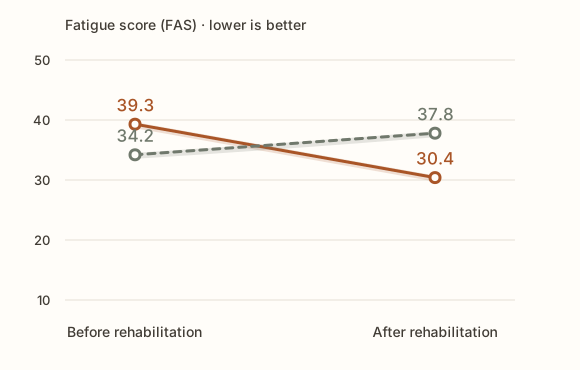
━ IHHT + rehabilitation (70 people)┄ Rehabilitation without IHHT (75 people)

Fatigue

A falling line means less fatigue.

Average FAS score: with IHHT from 39.3 to 30.4; without IHHT from 34.2 to 37.8.

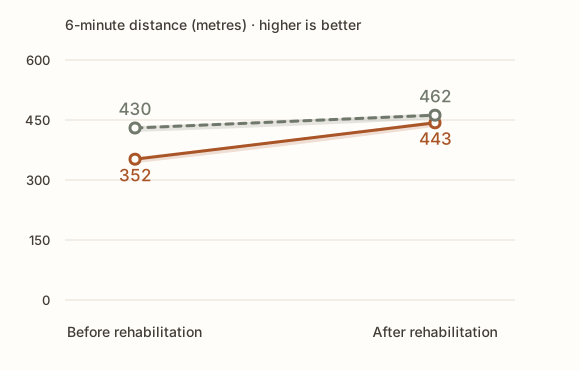
Walking capacity

A rising line means a greater walking distance.

Average six-minute walking distance: with IHHT from 352 to 443 metres; without IHHT from 430 to 462 metres.

Before and after measurements only: the lines do not show day-to-day progress. Walking capacity is not a direct measure of energy. The groups were not randomly assigned and differed at baseline and in treatment duration. Changes therefore cannot be attributed exclusively to IHHT. Individual results may differ.

View the study · Doehner et al., 2024, table 2 ↗

What does IHHT mean?

IHHT stands for Intermittent Hypoxic-Hyperoxic Training. ‘Hypoxic’ means the inhaled air contains less oxygen than ordinary outdoor air; ‘hyperoxic’ means it contains more. These phases alternate. It is therefore not continuous extra oxygen or physical exercise.

What happens during a session?

The goal, method and your suitability are discussed beforehand. If IHHT is considered appropriate, the mask and monitoring are fitted. Settings are adjusted to the individual.

  • You take a seat and breathe through the mask.
  • The device changes the composition of the air according to the chosen programme.
  • Your supervisor monitors your response, heart rate and oxygen saturation.
  • Afterwards, you discuss how the session went and what you experienced.

What is considered beforehand?

Your medical history, medication, current symptoms and response to exertion matter. This applies, for example, to heart or lung conditions. Resting during IHHT does not mean the stimulus suits everyone. Report changes in your health before every session.

What do the studies show?

A controlled pilot from 2024 involving 145 people with long COVID found greater improvements in walking distance and fatigue with IHHT alongside rehabilitation than with rehabilitation alone. The groups were not randomly assigned. A smaller randomised study in older adults also found positive outcomes within a combined programme.

These findings warrant further research. They do not prove that IHHT resolves general fatigue or insomnia. The populations, supervision and programmes studied differ; together, we discuss what the available knowledge means for your situation.

A clear reason to start

Your personal proposal connects IHHT to a specific goal. You know why it is being considered, what alternatives exist and when we will evaluate your experience. We discuss content, costs and possible unwanted reactions beforehand. No fixed result or required number of sessions is promised.

Sources and background

Research applies to the group and application studied. These sources do not predict an individual treatment outcome.

Give your energy
the attention it deserves.

Discover what a personal approach could mean for you. Discuss your goals with one of our specialists in a free, no-obligation introductory conversation.

Arrange a free introduction