Poor sleep
Difficulty falling asleep, waking frequently or starting the morning without feeling rested.
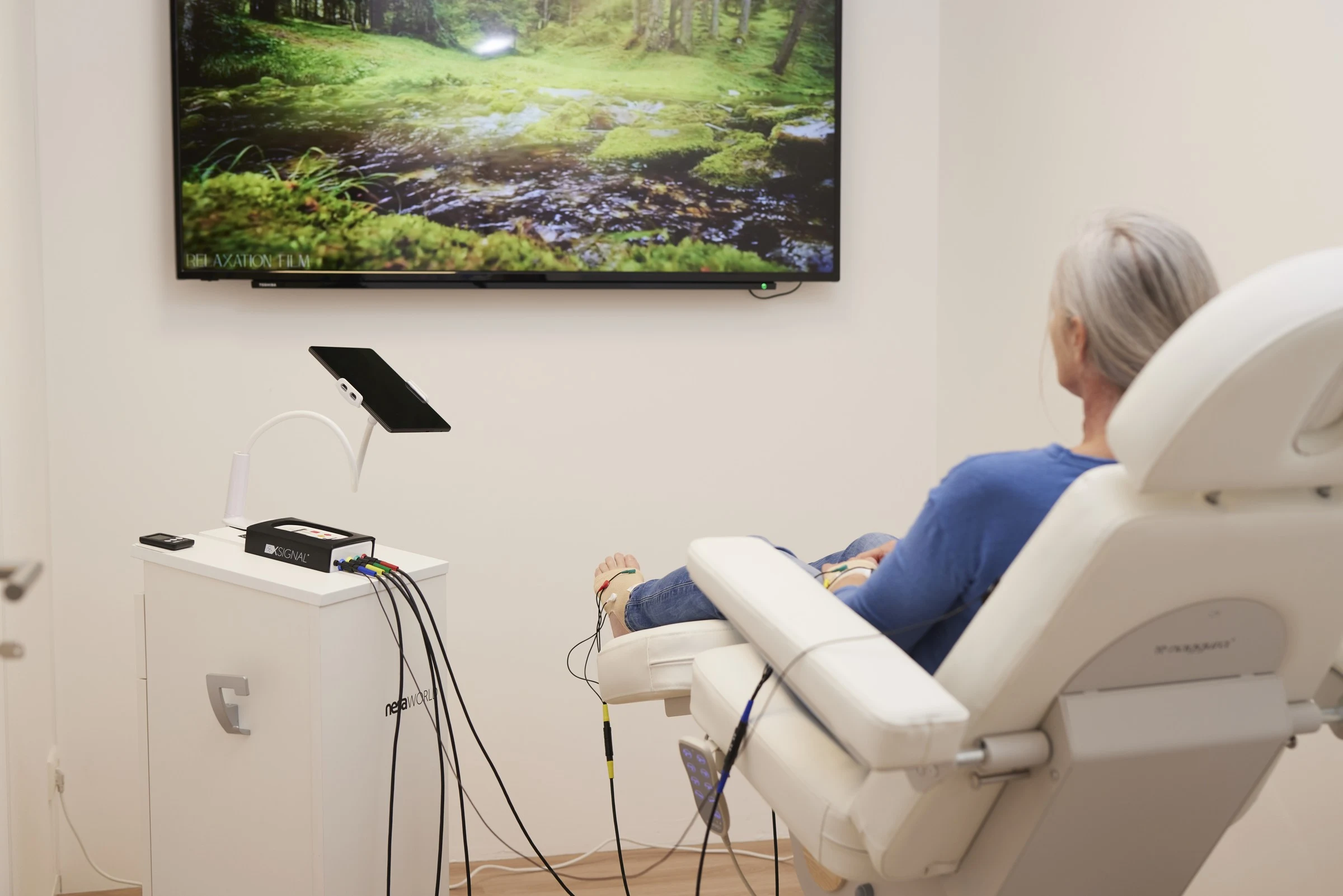
Poor sleep, constant fatigue or difficulty winding down can greatly affect your day. At Energy Clinics in Uden, we discuss whether NESA is an appropriate complementary treatment for your symptoms. During the session, you rest in a chair with electrodes on your skin.
Your symptoms as the starting point
These concerns can be a reason to arrange an introduction. We first discuss possible causes and whether NESA could be an appropriate addition. This overview is not a list of proven treatment indications.
Difficulty falling asleep, waking frequently or starting the morning without feeling rested.
Little energy for work, family or ordinary daily activities, even after rest.
Feeling tense or constantly switched on, for example during a stressful period.
Persistent pain that also affects sleep and daily functioning. We consider the connections and existing care.
You want to discuss how to align sleep, rest breaks and activity.
Fatigue or sleep problems after COVID, for example. Your capacity for activity and any worsening after exertion require extra attention.
Free and without obligation. For new or unexplained symptoms, assessment by your GP is the starting point.
During your appointment
From the first conversation to evaluation: you know what we do, and there is room for your questions.
We discuss your health, goals and whether NESA fits your situation. We explain the application and you can ask all your questions.
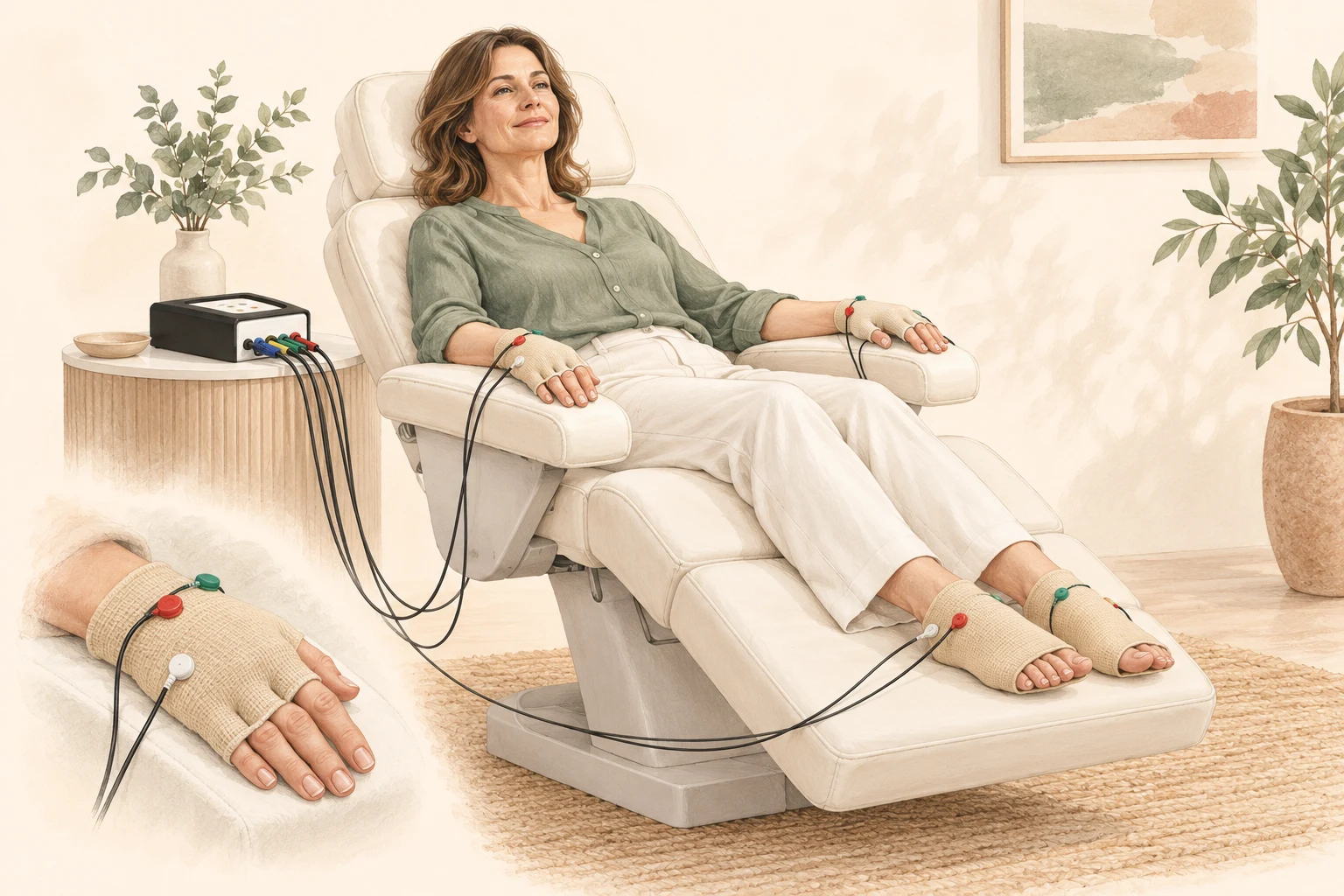
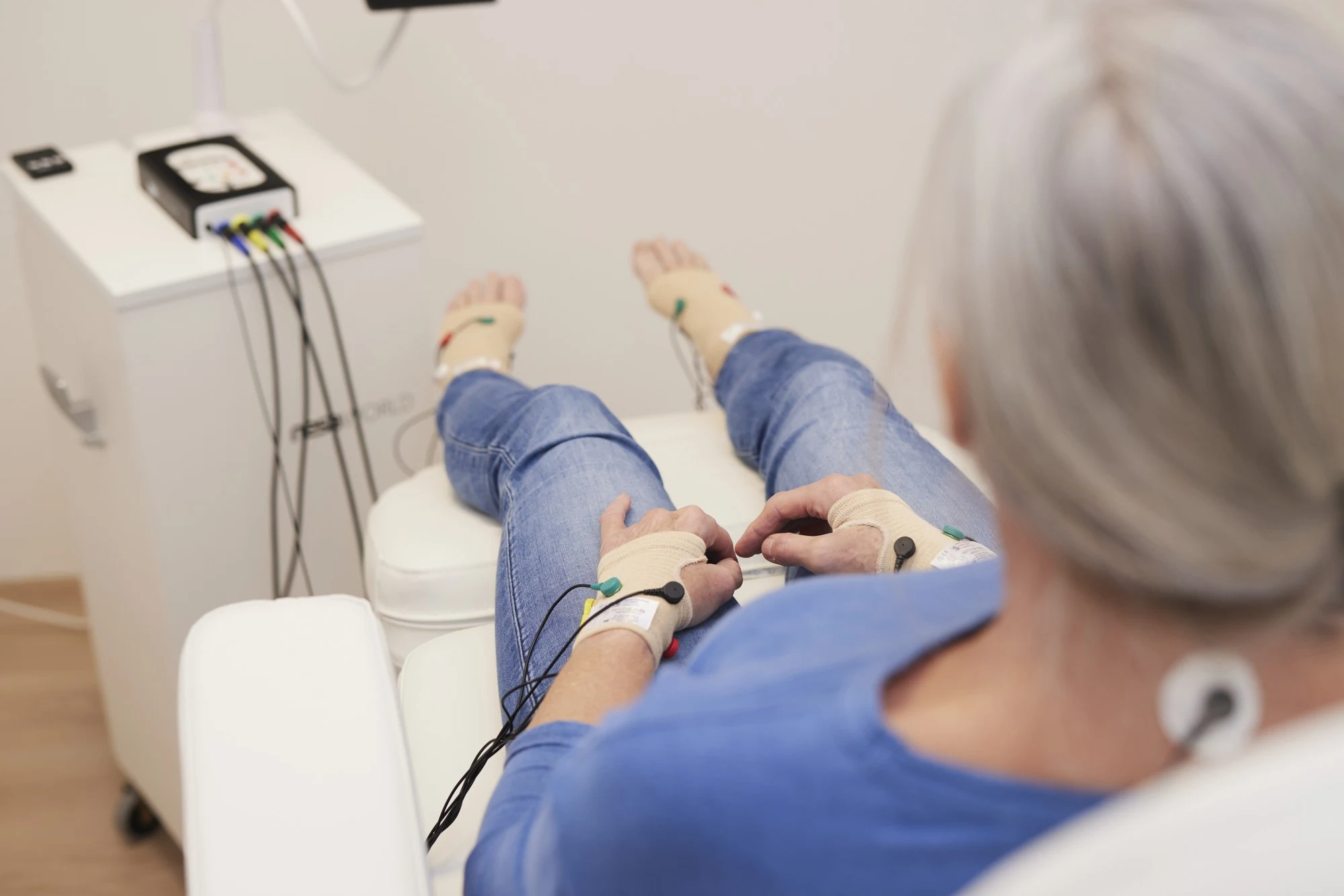
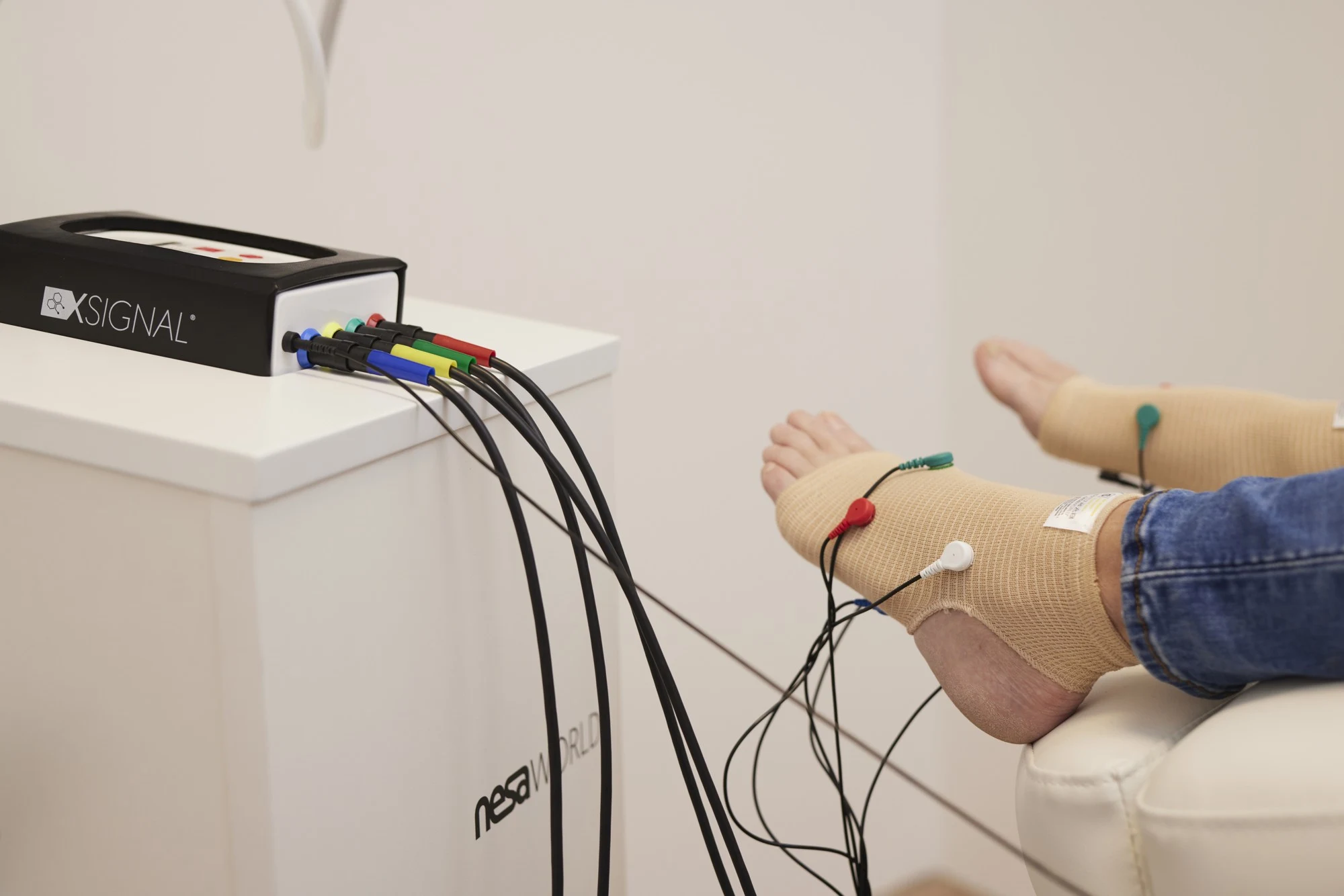
We place the electrodes at your hands and feet. You sit or lie quietly during the application. Tell us if anything feels uncomfortable or you have a question.
How did you experience the session? We discuss your questions and follow your personal goals. Together, we decide whether to continue, adjust something or stop.
Illustration of the application. The details and results vary by person.
The autonomic nervous system automatically regulates functions such as heart rate and digestion. It helps your body respond to exertion and settle into rest. Research into NESA explores whether weak electrical stimulation can influence this regulation.
Neuromodulation means influencing nerve activity. It is not a literal reset of your body. Poor sleep, pain and fatigue can have various causes; these symptoms do not automatically mean your autonomic nervous system is dysregulated.
The NESA system delivers weak electrical current through multiple electrodes, including at the hands and feet. It is being studied for influencing functions of the autonomic nervous system. This system regulates processes that occur without conscious control. What treatment means for a specific complaint needs separate investigation.
First, we explain how the electrodes are placed and the chosen programme. The skin at the contact points must be suitable for the application. You remain at rest during treatment.
Alongside your question, we discuss your health, relevant medication and any implants. Suitability is checked against the device instructions and your personal situation. The description ‘weak current’ does not replace that assessment.
A small placebo-controlled study involving 12 professional basketball players measured, among other outcomes, less wakefulness at night. A placebo-controlled pilot from 2026 found improved sleep questionnaire scores in women with an overactive bladder. That analysis included 43 participants who completed the programme.
These are positive signals within specific groups. They do not prove an effect in everyone who is tired or sleeps poorly. Small groups and study design limit certainty. Persistent insomnia still requires appropriate assessment and conventional sleep treatment.
You can come to us with questions about these symptoms. During the intake, we discuss the diagnosis, what has already been investigated and the support you receive. The research described here does not show that NESA cures these conditions.
With long COVID or ME/CFS, minor exertion can increase symptoms later. Report such worsening beforehand: treatment at rest is not automatically suitable or without exertion. We tailor any proposal to your situation and do not replace ongoing medical or psychological support.
This is another application being studied. A small pilot in women with an overactive bladder found fewer daily toilet visits and improved sleep questionnaire scores. Not all outcomes improved. This calls for larger follow-up studies, not a general treatment promise.
Do you often experience sudden urgency or other urinary symptoms? Have your GP assess the cause first. We then discuss separately whether complementary treatment is appropriate.
If NESA becomes part of your plan, we agree what you want to monitor, such as your experience of nights or rest breaks. Together, we discuss changes, including when there is no improvement or treatment feels unpleasant. NESA does not guarantee improvement in sleep or fatigue.
Research applies to the group and application studied. These sources do not predict an individual treatment outcome.
Discover what a personal approach could mean for you. Discuss your goals with one of our specialists in a free, no-obligation introductory conversation.
Arrange a free introduction